Porta potty rental in Yonkers: how it works
You call (914) 635-4437 and describe the job: the street address, the start date, how long the rental runs and who will use the unit. We match that to an independent local rental company and the provider gives you a price. If you accept, the provider drops the unit off, services it on the agreed schedule and collects it at the end. The provider owns the equipment and runs the trucks. Our part is the matching.
A portable toilet rental in Westchester is a simple thing to book, but a few Yonkers details make the difference between a smooth delivery and a driver circling the block.
Hills, stairs and tight streets
A lot of Yonkers is built on slopes running down to the Hudson. Two- and three-family frame houses on the west side often sit above the street with steps to the front door and a narrow driveway, if any. A porta potty is carried off a truck on a dolly or set down with a liftgate, and the person delivering it needs a short, firm path to a level spot. Long staircases, soft lawn and steep grass are where deliveries go wrong. Before you call, walk the route from the curb to where the unit should stand and note anything in the way: a gate, a car, a retaining wall, a step.
Apartment buildings and commercial lots
Prewar brick apartment buildings in southwest Yonkers and the larger complexes further out often have the most room in a rear lot or service alley. If the job is in or beside one of these buildings, ask the superintendent or property manager where the unit can go before you book, and give the provider their phone number. A unit parked where tenants back out of spaces will get moved, and a moved unit can tip.
Waterfront and riverside work
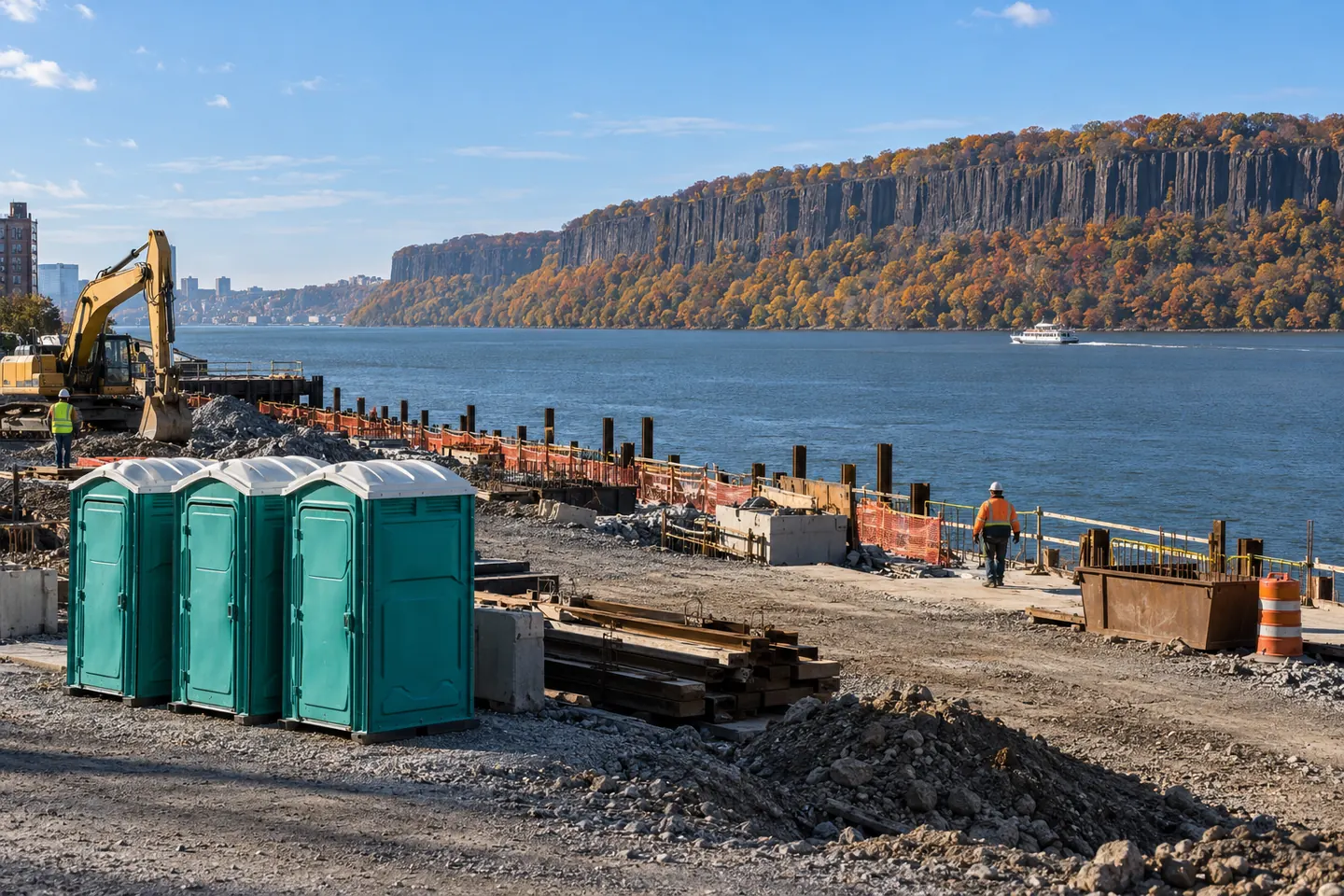
Sites close to the Hudson and around the Saw Mill River downtown tend to be open, flat and windy. Wind is the quiet risk with a tall plastic box. Providers can stake or strap units down; ask for it on any exposed lot, and keep units out of low spots that collect water after a storm.
Picking the right number of units
For job sites, the federal starting point is OSHA's sanitation standard for construction, 29 CFR 1926.51. It requires at least one toilet for a crew of 20 or fewer, and at least one toilet seat and one urinal per 40 workers above that. Most Yonkers renovation crews are well under 20 people, so one unit serviced weekly is the usual order. Add a second unit or a second weekly service when the crew grows or works long days.
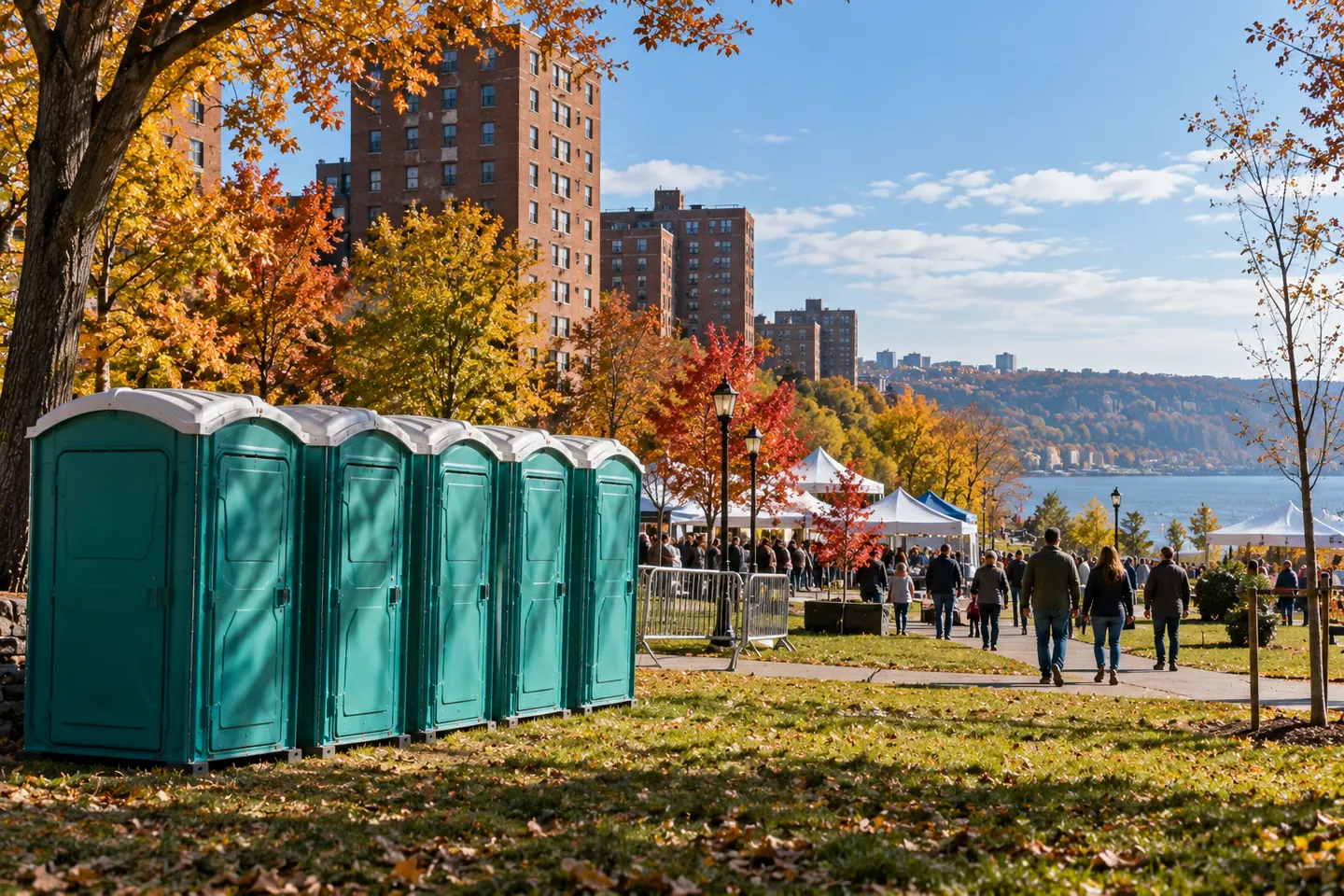
For events, think about the crowd and the clock. A three-hour backyard party is a different load from an all-day festival with food and drinks. Tell the provider the guest count, the hours and whether alcohol is served, and let them size it.
For anything open to the public, the 2010 ADA Standards for Accessible Design call for at least 5 percent of the portable toilets in each cluster, and no fewer than one, to be accessible. That means a wider, ground-level unit with grab bars and room to turn a wheelchair.
When to call
Spring through fall is the busy stretch for both construction and outdoor events in Westchester, and graduation and summer party weekends book out first. The cost guide notes that booking four to eight weeks ahead in peak season can save money. For winter work, ask for winterized units once overnight temperatures fall below freezing; it usually costs a little extra per billing cycle and keeps the tank from freezing solid.
Ready to book? Have the address and dates in front of you, then see what to have ready or just call.