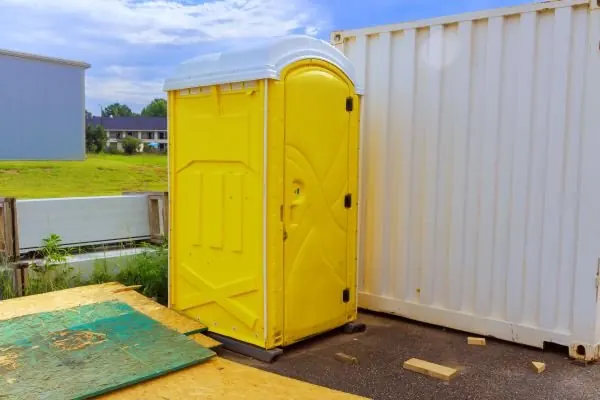
Job-site and renovation units
Standard single-seat units for construction, demolition and renovation work, serviced on a weekly route and counted against crew size.
The standard construction unit is a single-seat plastic cabin with a holding tank, a urinal, a toilet paper dispenser and a vent. It is the workhorse for framing, roofing, masonry, demolition and interior gut jobs across Yonkers, and it is what most callers need.
On a construction site the count comes from OSHA's sanitation standard, 29 CFR 1926.51: one toilet for up to 20 workers, then one seat and one urinal for every 40 more. Long shifts, Saturday work and subcontractor crews that overlap all push usage up, so tell the provider the peak head count, not the average.
Units on active sites get moved by forklifts, struck by machines and knocked over by wind. Pick a spot away from the swing radius of the excavator and the path of delivery trucks, close enough that people actually use it.
Ask about: the service day, who to call if the unit is damaged or tipped, and whether the rental runs by the week or the 28-day cycle.
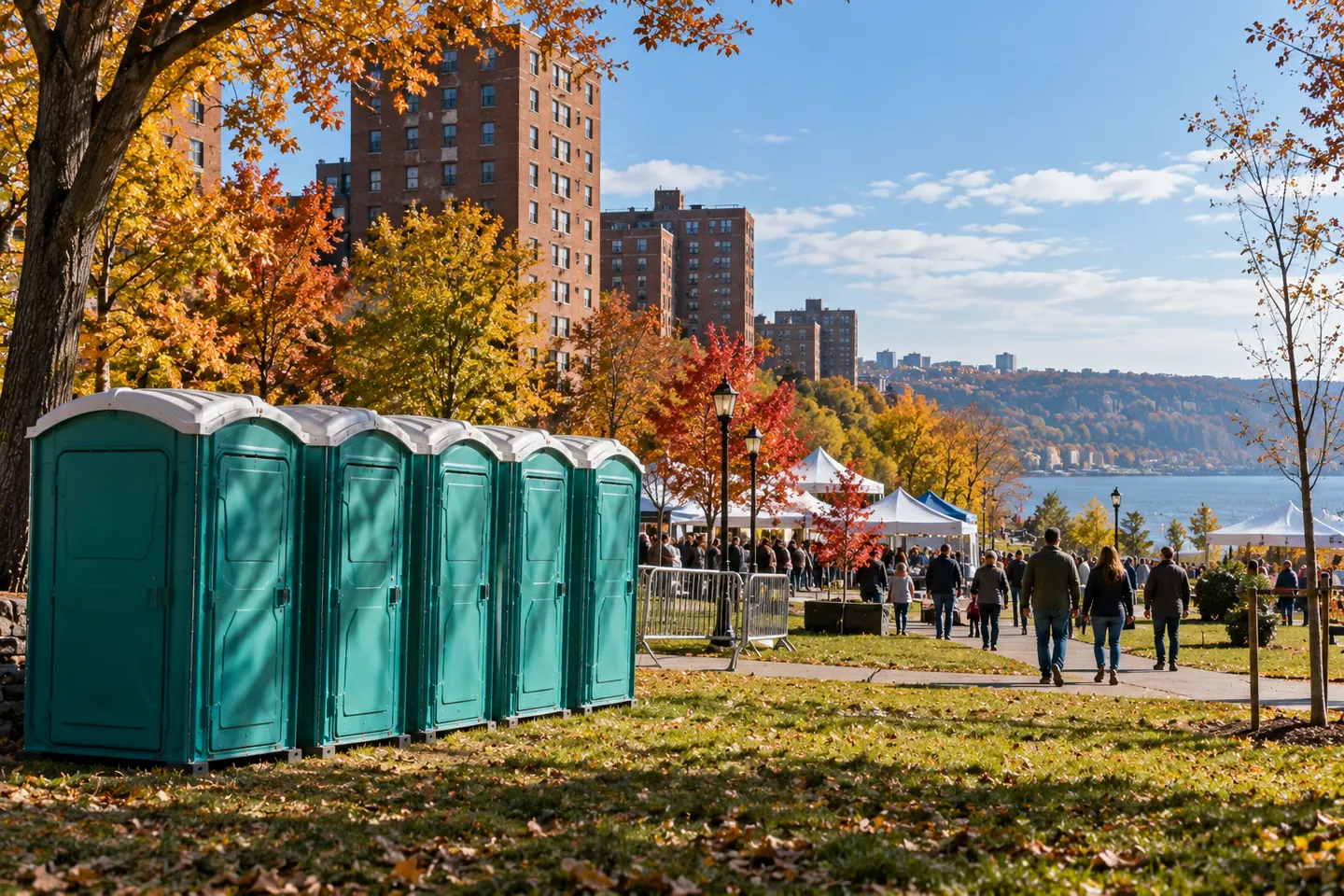
Event and party units
Units for block parties, graduations, park festivals and weddings, set in clusters with an accessible unit and a sink close by.
Event units are the same basic cabin, usually delivered cleaner-looking and stocked for heavy use over a short window. For Yonkers block parties, christenings, graduation parties, church festivals, little-league days and weddings in a backyard, the main decision is how many to cluster together.
A small group for a few hours may need only one or two units. A day-long event with food and drink needs more, plus an ADA-accessible unit in each cluster under the 2010 ADA Standards and a handwashing station near any food. Space the cluster away from the food tables and downwind if you can.
Events in public parks or on closed streets usually need the organizer to arrange permission with the City of Yonkers or, for county parks, with Westchester County Parks. Settle that first; the rental is the easy part.
Ask about: delivery the day before and pickup the day after, a mid-event service for long events, and lighting if the party runs past dark.
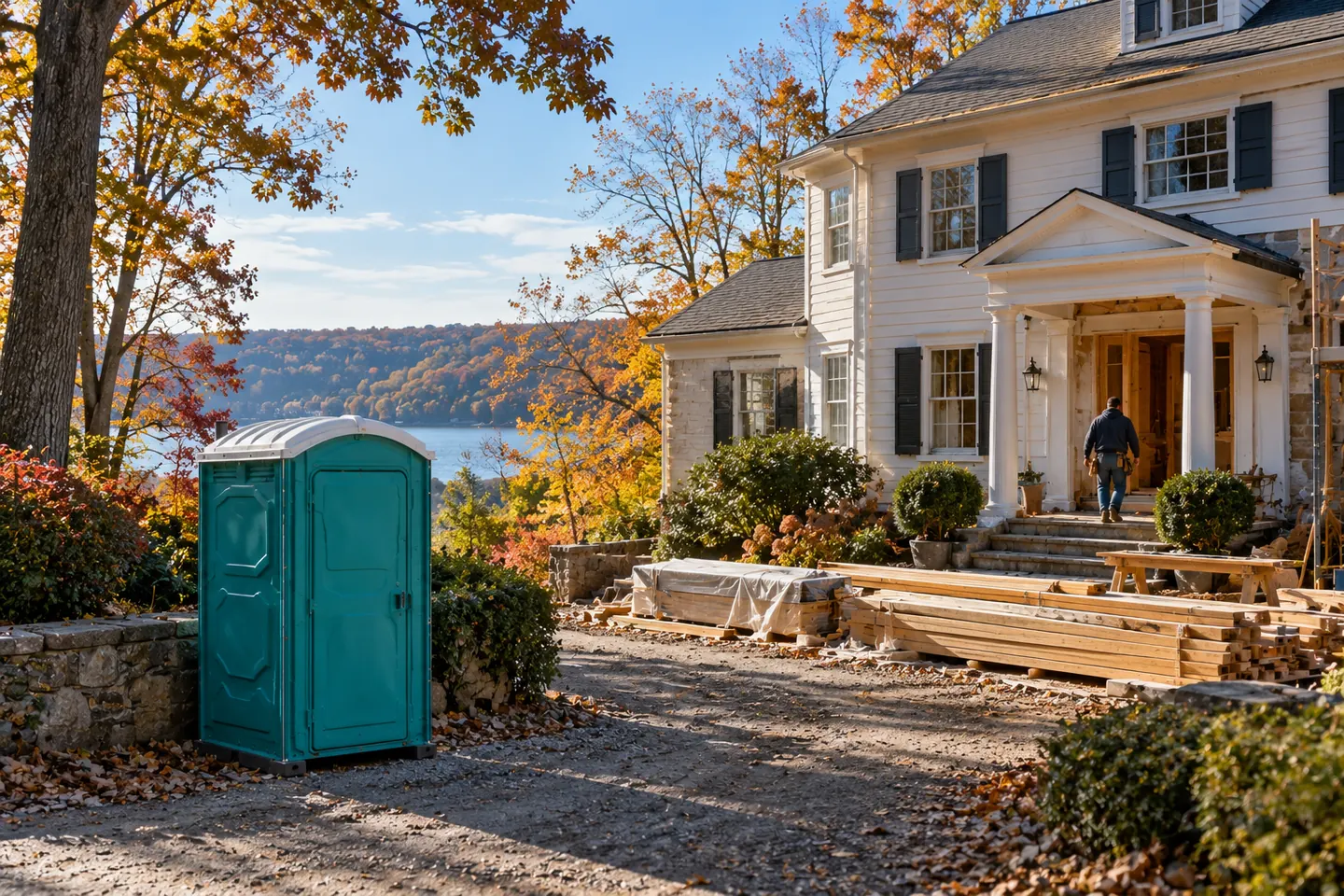
Single units for home projects
One unit in a driveway while a kitchen, bathroom or whole house is torn out, placed where the truck can reach it.
A kitchen or bathroom renovation often takes the only toilet in the house out of action for weeks. One unit in the driveway keeps the crew off the neighbors' goodwill and out of your house. It is also common for a family hosting a big gathering at home.
On Yonkers' hillside streets the challenge is getting the unit to a flat spot. The person delivering it needs a clear path from the truck to firm, level ground. Driveways are ideal. Steep lawns, soft garden beds and spots up a flight of steps are not.
If you live in a co-op, condo or a home with an association, check its rules on outdoor equipment before booking, and give the provider a contact for the day of delivery.
Ask about: the exact placement, whether the unit can face away from the street, and how the provider reaches the unit for service if the driveway is in use.
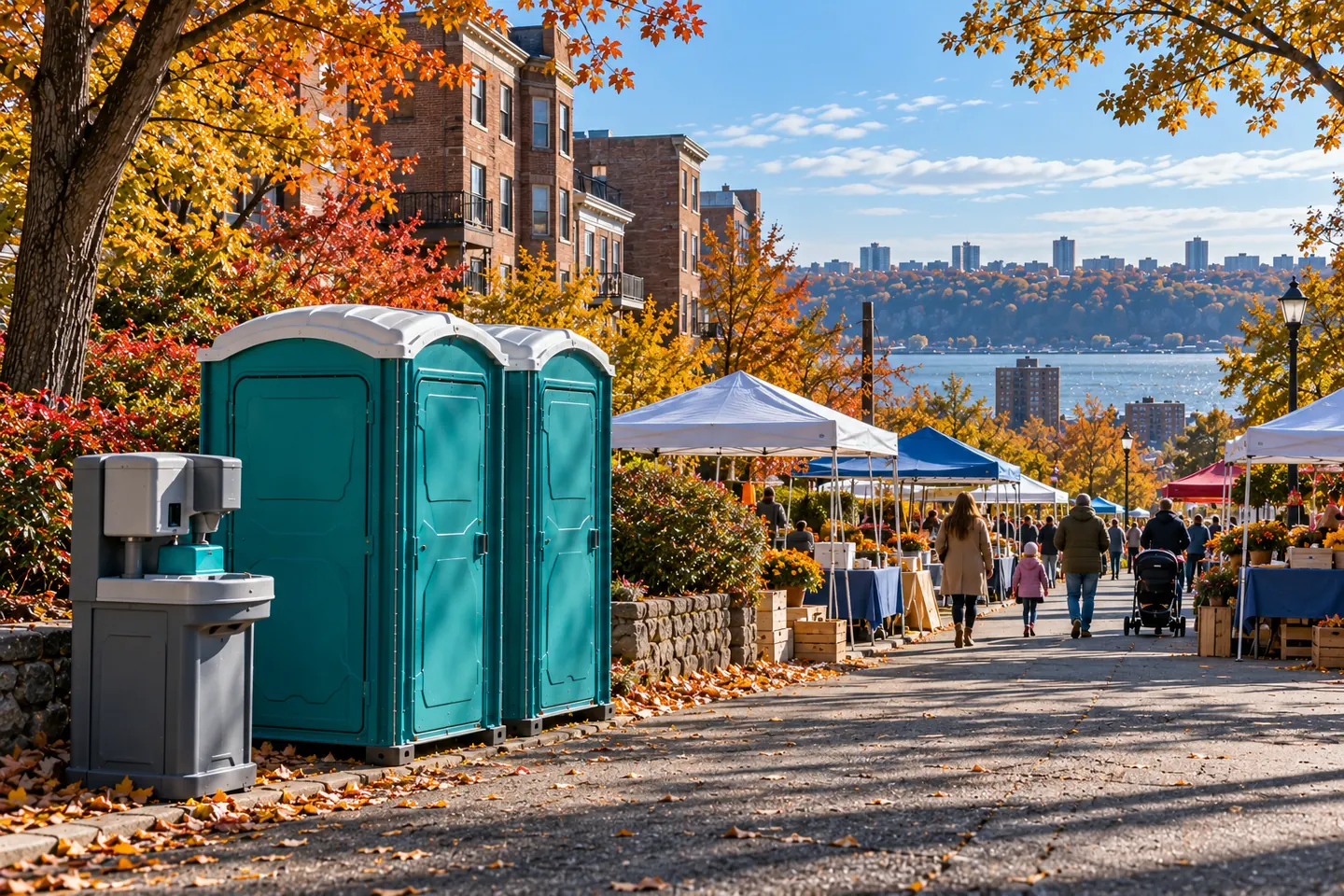
Handwashing stations
Freestanding sinks with fresh water, soap and paper towels, for food vendors, crowds and dirty work.
A portable handwashing station is a freestanding sink with a fresh-water tank, a foot pump, soap and paper towels. Some have two basins back to back. They are the right add-on for any event that serves food, for construction crews that handle concrete, roofing tar or demolition dust, and anywhere children use the units.
Stations need to be refilled and their gray-water tanks emptied, so they go on the same service schedule as the toilets. In freezing weather the water lines can freeze; ask whether a station can stay out or should be swapped for hand sanitizer dispensers from December to March.
Ask about: how many people each station is sized for and how often it is refilled.
Servicing and pump-outs
Scheduled pump-out, cleaning and restocking, plus extra visits for heavy-use weeks and busy event days.
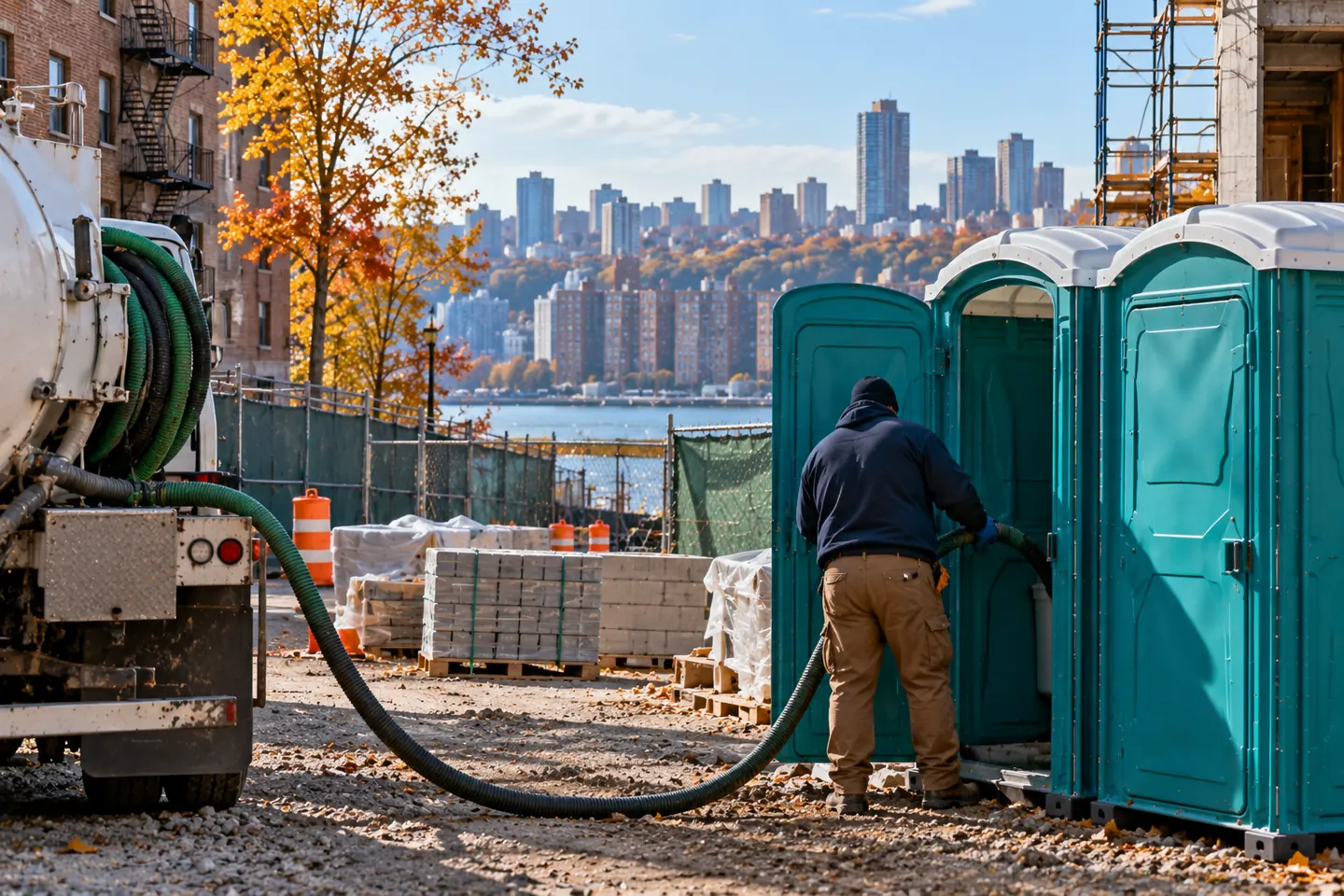
Servicing is what keeps a rented porta potty usable. A technician pumps the tank with a vacuum truck, scrubs and wipes the interior, adds fresh blue deodorizing fluid and restocks paper. On most job-site rentals that happens once a week and is included in the weekly price.
Heavier use calls for more visits. If the crew grows, the unit fills faster than a week, or there is an event mid-rental, ask for an extra service visit. Leave the access route clear on service day; a blocked truck means a missed visit.
Ask about: the regular service day, the price of an extra visit, and how to report a problem between visits.
Winter rentals
Cold-weather units with winterized tanks for sites that keep working through January freezes and snow.
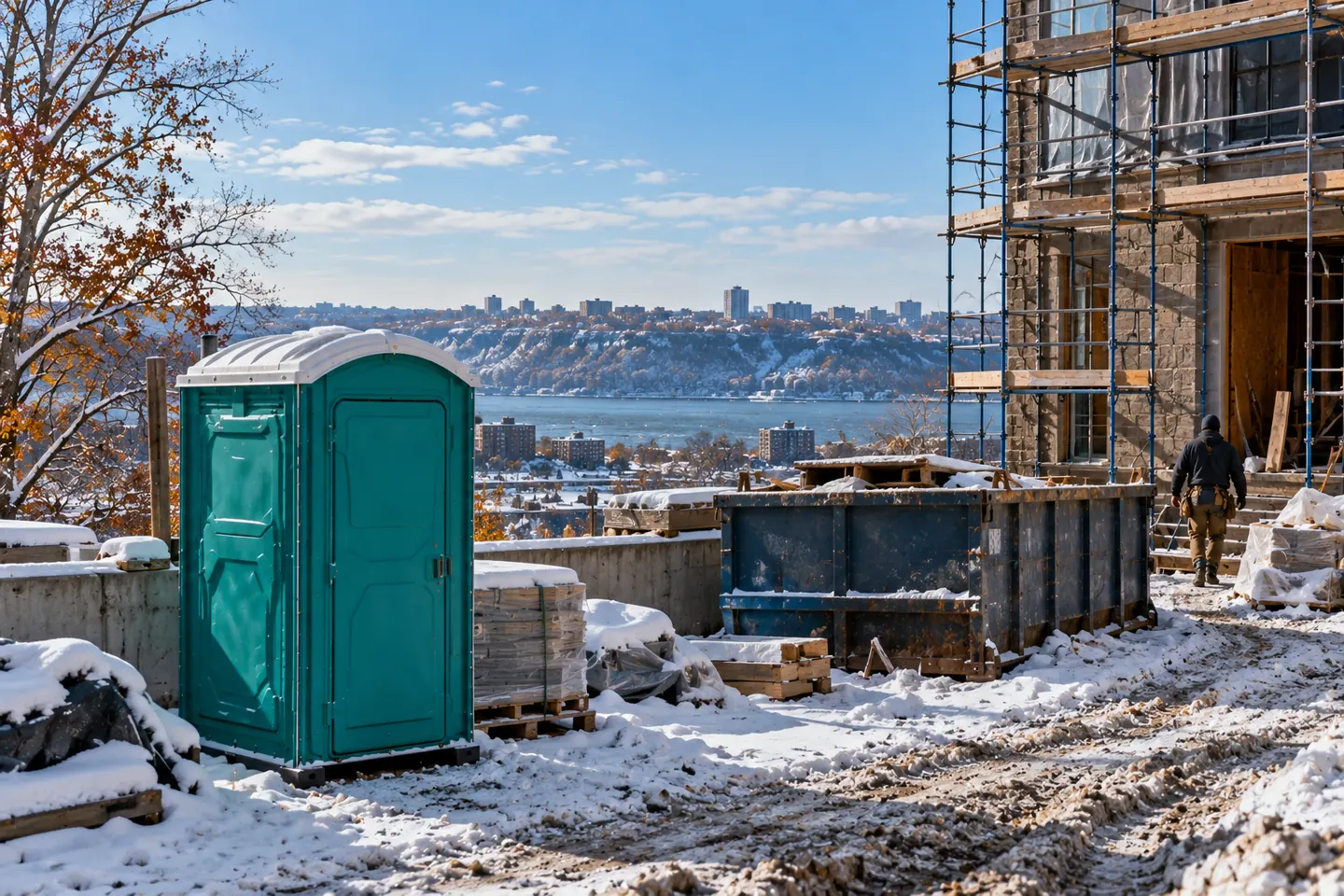
Yonkers winters bring hard freezes, snow and gusty wind off the Hudson. A unit that sits through January needs its tank winterized, usually with a salt brine or non-toxic antifreeze added at service, so the contents do not freeze solid and the unit can still be pumped.
Keep the path to the door shoveled and salted, and keep plowed snow from piling against the unit. A unit buried by a plow is a unit nobody can open and the service truck cannot reach.
Ask about: the winterization charge per billing cycle and what happens to the service schedule after a big snowfall.
What your Yonkers quote should include
Whichever unit you book, the provider's quote should spell out the following. If any item is missing, ask before you agree.
- Unit type and count: standard, ADA-accessible, flushable with sink, or handwashing stations, and how many of each.
- Rental period: the delivery date, the pickup date, and whether billing runs by the day, the week or a 28-day cycle.
- Service schedule: how many pump-out visits are included, on which day, and the price of any extra visit.
- Delivery and pickup charges: whether they are built into the rental or listed separately.
- Placement: where the unit will stand, and anything the driver needs to know about steps, gates or slopes.
- Winterization: if the rental runs through cold months, the charge per billing cycle.
- Damage and loss terms: what you owe if a unit is tipped, vandalized or damaged by equipment on site.
- Fuel or environmental surcharges: some companies add these; you should see them before you sign, not on the invoice.
Typical costs
Prices change with the unit type, the number of units, how long you keep them and how often they are serviced. The Yonkers cost guide lays out national market ranges from a published source and explains why New York-area rentals usually land toward the upper end. For an exact figure, call (914) 635-4437.
Coverage
The focus of this site is the City of Yonkers, from Getty Square and Ludlow on the river side to Crestwood, Dunwoodie and Lincoln Park in the east. Calls from neighboring southern Westchester County communities are welcome, and the provider will confirm whether its route reaches your address.
Yonkers renters usually ask these first
What is the difference between a standard and an ADA porta potty?
A standard unit is a compact single-seat cabin with a step up at the door. An ADA-accessible unit sits at ground level, is wide enough to turn a wheelchair inside and has grab bars. For public events, the 2010 ADA Standards call for at least 5 percent of the units in each cluster, and no fewer than one, to be accessible.
Can I rent a single porta potty for a home renovation?
Yes. A single unit in the driveway for the length of a kitchen, bathroom or roofing job is one of the most common Yonkers rentals. Expect weekly service and a rental billed by the week or by the 28-day cycle.
Do porta potties smell?
A properly serviced unit should not smell badly. Odor builds when a unit is overdue for a pump-out, sits in direct sun in summer, or serves more people than it was sized for. Fix it with an extra service visit or a second unit.
Do I need to be there for delivery?
Not always. Many providers drop off to a marked spot if the placement is clear and agreed in advance. Mark the spot, leave the route open, and give a phone number for the delivery driver.
Are handwashing stations required?
For food events they are a good idea and often expected by whoever approves the event, and job-site rules call for washing facilities in many cases. If you are unsure, ask the provider and the event organizer, and add one.
Tell us the address, the dates and the head count
Tell us the city, the job and the dates. We will line up a local provider and a price.